Quote

"There is nothing to writing. All you do is sit down at a typewriter and bleed." -Ernest Hemingway

Showing posts with label reading. Show all posts

Sunday, November 1, 2015

Sticking to the Important List!

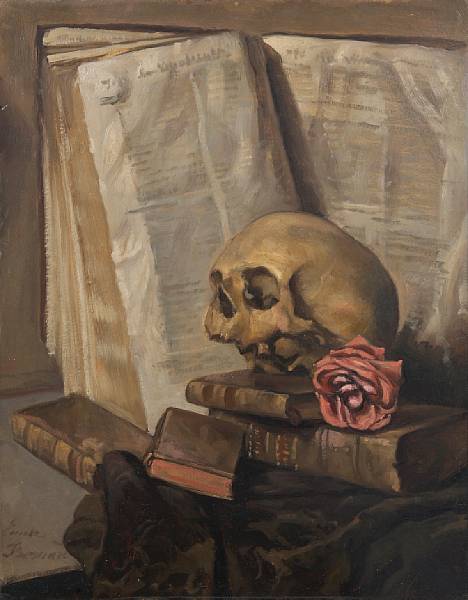
Image from Wikipedia Commons
This year I have been thinking about ways to be more productive by spending more time doing enriching activities - i.e. the things that will make me a better person over the long haul. Thinking is the operant word here, because in some cases I have not been very successful. I guess you could say I am doing a little life-"editing" at the moment. The closer I get to 30, the more I am considering how I use and spend my precious time. Frankly, I think its important to add a little momento mori to your life to keep your focus fixed on what is important.

Making a list of important, enriching, and productive tasks is easy for me. Adhering to that list is not. A quick list of items I would like to dedicate more attention to are:

  • writing/blogging
  • reading (especially offline)
  • listening to podcasts/audiobooks
  • drinking more water/being more health-conscious
  • exercising
  • playing guitar

Unfortunately, much of my time gets wasted on less productive, less enriching acts:

  • Watching TV/Netflix
  • Vegging out online
  • Shopping for the next thing online
  • Playing computer games
Between these two lists, there is a major disconnect in the way I spend my time. I know the things I should be focusing on/doing, but it is a lot easier to default to the second list of entertaining distractions/diversions. These things are easier, more fun, and demand less of my attention and dedication. Ultimately, however, they do not end up making me feel like I have accomplished much. So, the task is to figure out how to devote more attention to the first, more important list. And, that is what my attention has been set on this year. I have been figuring out better habits for myself, and now I am figure out how to follow through with those better habits. 

Part of the success of better habits I think is based on having a gentle, helpful, and understanding view of the long term. For instance, I am writing/blogging more this year, but maybe not as much as I should be. Still, this is a win! I am reading more this year, but only by degrees from last year. Still, this too is a win! I read somewhere that everyone should aim to get 1% better each day. That is a small win, but over the long haul, people could see some major results. 

I am trying to live my life according to the philosophy that time is precious. In doing so, I have to take stock on how I spend my time. Really, I would just like to live life to the fullest and use my time wisely. In the end, I think this is what everyone wishes. But, let's face it, it's hard to adhere to the important list!


Tuesday, February 24, 2015

Reaching Enlightenment in Kipling's "Kim"

Penguin Classics Edition of Kipling's Kim
Image from Amazon.com
I recently muscled my way through a classic that alluded me through graduate school.

When I first read, rather tried to read, Rudyard Kipling's Kim in graduate school I felt I had met my match. Although this was the book that was widely considered to be Kipling's masterpiece I couldn't believe it at the time.

I found that Kipling's book of high adventure during the height of British power in India to be a dull, prodding affair, especially in the earlier chapters. I found myself in the same position as Kim, the young title character, and his lama (read: not llama), looking for enlightenment in some way.

When I was in grad school, I read enough criticism, did enough background research, and read enough of the book to write a decent response essay highlighting the main ideas and themes behind the book. I managed my way through my class discussion. And yet, after all this, I knew I had not conquered Kipling's book.

Part of what turned me off of Kipling's book initially was the fact that the author has been trailed in history by a somewhat morally reprehensible past, that is inescapable, but not always helpful in judging a work of literature, initially. My only familiarity with Kipling in grad school came from having earlier read his poem, "The White Man's Burden," which smacked of all kinds of racism, cultural dominance, and Social Darwinism. Not exactly admirable traits in a writer.

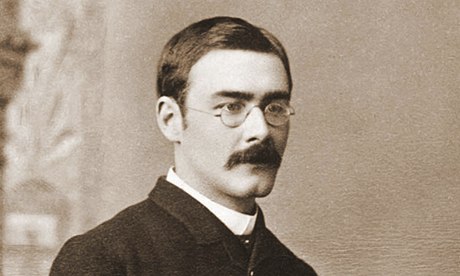
Kipling, a writer not without edges.
Image from theguardian.com
And, yet, through it all, Kipling remains a towering giant of English literature.  Why? The answer to that question alluded me until a couple of nights ago when I finished Kim. Personal, social, and moral shortcomings aside, Kipling's writing has an endearing, enduring quality, which remains largely untarnished by time and criticism.

Edward Said, author of Orientalism, had a scathing view of Kipling's Kim at the end of the book. In Said essay, he highlights all the ills of British Colonialism in India. Boiled down in essence, Said posits the British citizens believed they were destined and entitled to rule, and as such, believed they were better than all races, including Indians.

This was the world in which Kipling penned Kim, the story of a young, orphaned British boy who goes on a quest with a lama to find a sacred river in the northern reaches of India. The lama believes that finding the river is essential in reaching his enlightenment. The boy simply wants adventure. At times Kim believes the old man's quest to find the sacred river a little crazy, but follows nonetheless, partly born out of a sense of deep compassion and respect for the withered spiritualist. It is here that Kipling's powers as a writer shine through.

Apart from the undertones of racism (on all sides) that run through the book, Kipling's message, story, quest, etc. has a lot heart and remains timeless. That timeless nature is evident is the book, where the lama tells the boy that life is like a "Wheel" that goes around and around. Enlightenment releases you from the wheel, but only for those wise enough to find it. A late scene in the book has Kim coming face to face with a woman who lost her son, an irony not lost on the reader, since the boy lost his parents. This is a great example of the wheel coming to play in the story, as both philosophy and motif. Pain, desire, struggles, loss, and happiness are all part of the "Wheel" and are part of life.

At the books end, the two find the river, and the lama beckons Kim to join him in his enlightenment. The book ends in a somewhat obscure, open-ended manner. Kim doesn't really believe in the concept of enlightenment, but the lama says, "Come!" and join him, as if enlightenment is his for the taking. He need only walk the path.

By the novel's end, I'm not sure if I fully reached enlightenment, but I definitely feel I have a deeper appreciation and understanding for Kipling's work.